Home / Blog / Medigap in Canada
Medigap in Canada: what Washington border residents' plans really pay north of the line
 By Vadim Marusin, licensed Medicare insurance agent in Washington (WAOIC #1365574). Insurer data checked against the state chart current as of October 8, 2026.
· 10 min read · Travel · Local
If you live in northwest Washington, crossing into British Columbia is ordinary. Getting sick there is a different matter, because Original Medicare almost never pays in Canada. Here is what your Medigap plan does and doesn't cover, in dollars.
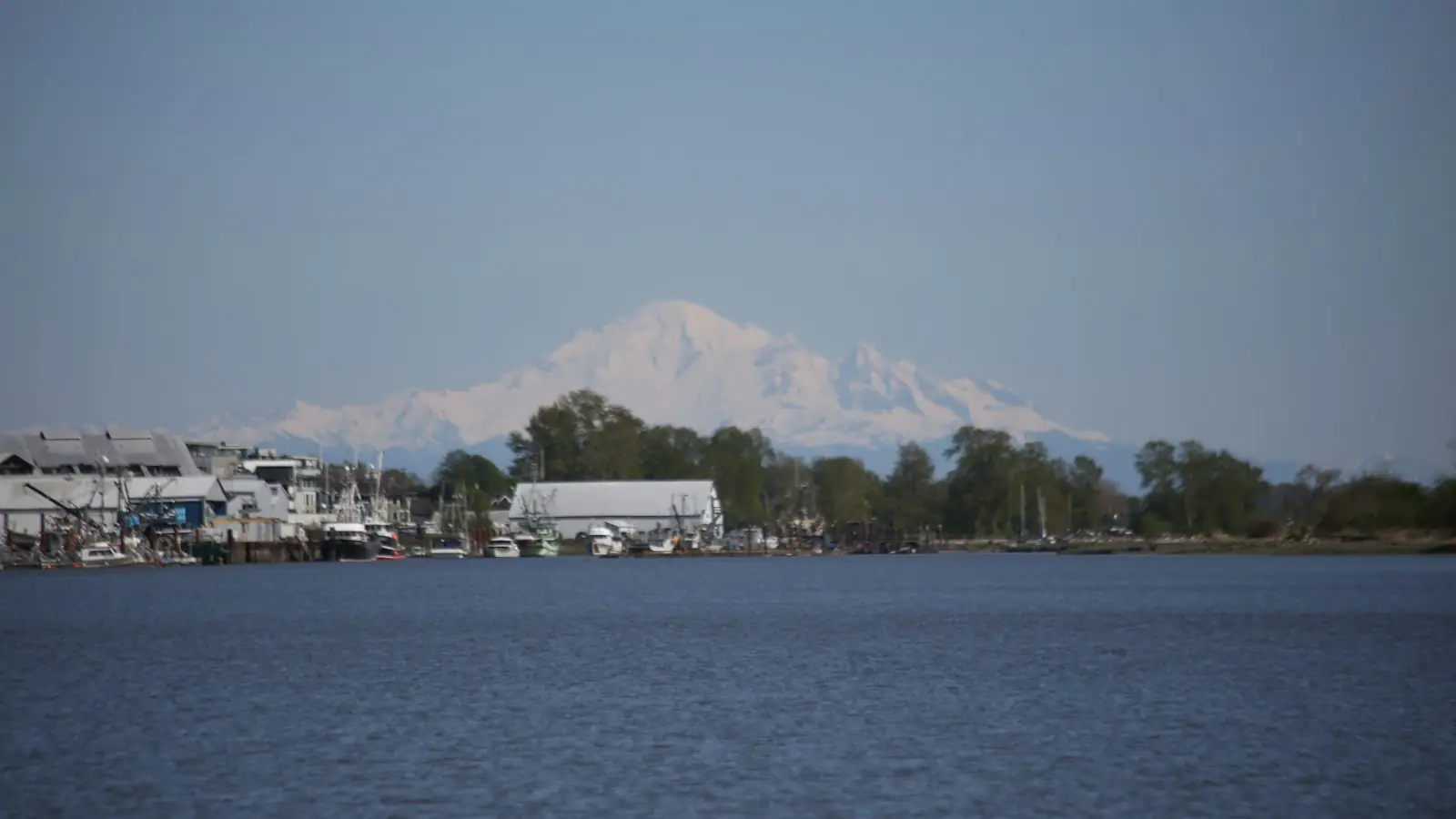
I live in Whatcom County, and for a lot of people up here the border is part of the week: shopping in Surrey, visiting family in Vancouver, a ferry to Victoria, a drive to Whistler. So the question comes up often: "If something happens to me in Canada, does my Medicare cover it?"
The short answer is that Original Medicare almost never does, and a Medigap policy may cover part of it, depending on your plan letter. The longer answer has some numbers in it that are worth knowing before your next crossing.
What Original Medicare pays in Canada
Medicare.gov describes the exceptions as rare. Original Medicare may pay for care outside the U.S. only in these situations:
- You're in the U.S. when a medical emergency happens, and a foreign hospital is closer than the nearest U.S. hospital that can treat you.
- You're traveling through Canada without unreasonable delay, by the most direct route, between Alaska and another U.S. state, you have a medical emergency, and the Canadian hospital is closer than the nearest U.S. hospital that can treat it.
- You live in the U.S. and a foreign hospital is closer to your home than the nearest U.S. hospital that can treat your condition, whether or not it's an emergency.
An ambulance ride to a foreign hospital is covered only if you're admitted for medically necessary inpatient care that Medicare covers under one of those rules.
Notice what isn't on the list: a Washington resident visiting Vancouver for the weekend who has a heart attack there. In that situation Original Medicare pays nothing for the hospital or the doctors.
Point Roberts is the exception that proves the rule
Point Roberts, in Whatcom County, is a U.S. town you can only reach by land through Canada. For people who live there, a hospital in the Vancouver area is often much closer than any U.S. hospital. That's the situation the third exception was written for, and Medicare may pay for inpatient care at the closer Canadian hospital.
When Medicare does pay under one of these exceptions, a Medigap policy pays its normal share too, the same way it would at a U.S. hospital. If you live in Point Roberts, keep records of the care and the distances involved, and ask Medicare (1-800-MEDICARE) or your Medigap insurer how claims from the Canadian hospital are handled before you need them.
What Medigap pays: the foreign travel emergency benefit
Six of the Medigap plan letters include a benefit for emergencies outside the United States:
| Plan | Foreign travel emergency coverage |
|---|---|
| C, D, F, G, M, N | 80% of medically necessary emergency care after a $250 deductible each year, up to a $50,000 lifetime limit |
| A, B, K, L | None |
| High-deductible Plan G | Same benefit, but you must first meet the plan's yearly deductible |
Three conditions come with it:
- It's for emergencies. Planned treatment, routine checkups or care you traveled to get aren't covered.
- The emergency has to start during the first 60 days of a trip. For people who cross for a day or a weekend, every trip starts a new 60 days. For someone spending a whole winter abroad, care after day 60 isn't covered.
- The $50,000 limit is for your lifetime, not per trip or per year.
Plan G and Plan N have exactly the same foreign travel benefit. Plan N's copays and its gap on excess charges don't matter outside the U.S., because excess charges are a Medicare billing rule that doesn't apply to Canadian providers.
How the money works, with examples
Canadian hospitals bill non-residents directly. Fraser Health, which runs the hospitals from Surrey and White Rock to Abbotsford and Chilliwack, says visitors who aren't covered by B.C.'s Medical Services Plan are billed for their care. It also says doctors bill separately from the hospital, so after an emergency visit you can expect a hospital bill and a separate bill from each doctor.
Non-resident rates are set by the health authorities and are well above what B.C. residents' care costs the province. You're usually expected to pay and then claim from your insurance.
Example 1: an emergency appendectomy in Vancouver
Example: say you're 68, you have Plan G, and you're visiting your daughter in Vancouver when you develop appendicitis. You go to the emergency department, have surgery and spend two nights in the hospital. The hospital and doctors' bills total $20,000 in U.S. dollars.
- Original Medicare pays: $0.
- Plan G: you pay the first $250. Plan G pays 80% of the remaining $19,750, which is $15,800.
- You pay: $250 + 20% of $19,750 ($3,950) = $4,200.
That's real money, but far less than $20,000, and it's the case the benefit was designed for.
Example 2: a serious emergency that hits the lifetime limit
Example: same person, but this time it's a heart attack, with an ICU stay and a cardiac procedure. The bills total $80,000 in U.S. dollars.
- Plan G would pay 80% of $79,750, which is $63,800, except that the benefit stops at the $50,000 lifetime limit.
- Plan G pays: $50,000.
- You pay: $30,000.
And because the limit is lifetime, that policy's foreign travel benefit is used up. Any future emergency abroad would be entirely yours unless you have other coverage.
Example 3: a sprained wrist in Whistler
Example: you slip on ice, go to an urgent care clinic and get an X-ray and a brace. The bills total $600 in U.S. dollars.
- Plan G: you pay the first $250, then 20% of $350 ($70). Plan G pays $280. You pay $320.
For small bills the $250 deductible does most of the work, so don't expect much back for minor care.
Side by side
| Situation | Total bills (USD) | Plan G or N pays | You pay |
|---|---|---|---|
| Sprained wrist, urgent care | $600 | $280 | $320 |
| Appendectomy, 2 nights | $20,000 | $15,800 | $4,200 |
| Heart attack, ICU | $80,000 | $50,000 (lifetime limit reached) | $30,000 |
| Same events with Plan A, B, K or L | $0 | Everything |
These assume it's your first foreign claim of the year (so the $250 deductible hasn't been met) and that the policy hasn't paid any foreign claims before.
Five border situations, and which rules apply
An Alaska cruise that leaves from Vancouver. Many Alaska cruises start or end in Vancouver. On the ship, Original Medicare can pay a doctor allowed to practice on board only when the ship is in a U.S. port or no more than 6 hours from one. Vancouver isn't a U.S. port. So while you're in Vancouver, or at sea more than 6 hours from a U.S. port, the Medigap foreign travel benefit is what applies (with Plans C, D, F, G, M or N). In Alaskan ports such as Juneau or Ketchikan, you're in the U.S., and Medicare and Medigap work normally on shore.
Driving the Alaska Highway. This is the one trip Medicare's rules were written around. If you're driving between Washington and Alaska through B.C. and the Yukon by the most direct route, without unreasonable delay, and you have an emergency, Medicare can pay at a Canadian hospital that's closer than the nearest U.S. hospital that can treat you. A two-week sightseeing detour to Banff is not the most direct route, so build in travel insurance if your plans wander.
The ferry to Victoria, or a weekend in Whistler. These are ordinary visits. Medicare doesn't pay. The Medigap foreign travel benefit applies if you have one of the six plans that include it, and each trip starts a new 60 days.
Wintering in Mexico or spending summers at a B.C. cabin. The 60-day limit is the problem here. An emergency on day 75 of a stay isn't covered by Medigap. If you spend long stretches outside the U.S., a separate travel medical policy (or an international policy for very long stays) is the realistic answer.
Seeing a Canadian doctor or dentist by choice because it's cheaper. That's planned care, not an emergency, so neither Medicare nor Medigap pays. You pay the Canadian provider directly, and nothing counts toward your U.S. deductibles.
When a separate travel medical policy makes sense
The foreign travel benefit is a backstop, not full coverage. A separate travel medical insurance policy is worth pricing if any of these are true:
- you spend more than 60 days at a time in Canada or abroad,
- you have Plan A, B, K or L, which have no foreign benefit at all,
- you'd struggle to pay 20% of a large bill, or the part above $50,000,
- you want coverage for a medical flight or ambulance back to a U.S. hospital, which Medigap doesn't include.
When you compare travel policies, read three things carefully: how they treat pre-existing conditions (many exclude conditions that weren't stable for a set period before the trip), whether they pay the hospital directly or reimburse you, and whether they cover transport home. These policies are separate products and aren't regulated like Medigap, so the details vary a lot.
Prescription drugs bought in Canada
Medigap doesn't cover prescription drugs anywhere, and Part D drug plans generally don't pay for drugs bought outside the U.S. If you fill a prescription at a B.C. pharmacy during a trip, expect to pay for it yourself.
How to file a foreign claim
Plan for this before you travel, because you'll be the one doing the paperwork.
- Carry your Medicare card and your Medigap card. Canadian hospitals won't bill Medicare, but having your policy number handy speeds up the claim.
- Pay or arrange payment with the hospital and each doctor. Ask the hospital's billing office how they want to be paid.
- Get itemized bills that show the dates, each service and the amount, plus proof that you paid. A total on a receipt isn't enough.
- Ask for a short medical summary that shows it was an emergency and when it started. That's how the insurer checks the "emergency" and "first 60 days" conditions.
- Call your Medigap insurer for its foreign claim form and ask how it converts Canadian dollars to U.S. dollars. Keep a record of the exchange rate on the date you paid.
- Submit everything promptly and keep copies.
What this means for choosing a plan
If you cross the border often, the foreign travel benefit is one more reason to choose among Plans G, N, D or high-deductible G rather than A, K or L. It shouldn't be the only reason, because it's limited to 80% and $50,000 for life, but for someone who's in B.C. every month it has real value.
Inside the United States, every Medigap plan works the same way in every state, with no network. If you see doctors in Bellingham, Seattle or anywhere else that accepts Medicare, the plan pays the same as at home. The travel coverage guide covers snowbirds and other states.
The short version
Original Medicare pays in Canada only in narrow cases, such as a Canadian hospital being closer than any U.S. one, which can apply in Point Roberts. For everyone else, a Medigap Plan C, D, F, G, M or N pays 80% of emergency care after a $250 yearly deductible, for emergencies that start in the first 60 days of a trip, up to $50,000 over your lifetime. Plans A, B, K and L pay nothing abroad. Expect to pay the Canadian hospital and doctors yourself and claim afterward, so keep itemized bills. If you spend long stretches in Canada or want coverage beyond those limits, price a separate travel medical policy.
Common questions
Does Medicare cover me in Canada?
Only in rare cases. Original Medicare may pay if a Canadian hospital is closer than the nearest U.S. hospital that can treat you, in certain emergencies while traveling between Alaska and another state, or if you live closer to a Canadian hospital than to a U.S. one. Most trips to B.C. don't qualify.
Does Medigap Plan G cover emergencies in Canada?
Yes. Plan G pays 80% of medically necessary emergency care after a $250 yearly deductible, for emergencies that begin during the first 60 days of a trip, up to a $50,000 lifetime limit.
Does Plan N cover foreign travel?
Yes, with exactly the same benefit as Plan G: 80% after $250 a year, up to $50,000 over your lifetime.
Will a Canadian hospital bill my Medigap insurer?
Usually not. Expect to pay the hospital and each doctor, then file a claim with your Medigap insurer using itemized bills and proof of payment.
Does the 60-day rule reset each time I cross the border?
The benefit applies to emergencies that start during the first 60 days of a trip. A new trip starts a new 60 days, so short, frequent trips are each covered. A long continuous stay isn't covered after day 60.
Sources
- Washington OIC / SHIBA, 2026 Approved Medicare Supplement (Medigap) plans (rates current as of October 8, 2026)
- Washington OIC, Medigap (Medicare Supplement) plan coverage and costs
- Medicare.gov, Travel outside the U.S.
- Medicare.gov, Compare Medigap plan benefits
- Fraser Health, Non-residents fees
- Fraser Health, Hospital fees
- Washington OIC, Medigap plan coverage and costs